 I
Service
At least eight hours a week at a local nonprofit or a low-income school — sustained relationships, not one-off volunteering.
An intentional community · Northwest Denver Campus
Romero House is a student residence steps off the Regis University campus, where undergraduates from every field of study spend an academic year committed to social justice, faith, and the neighbors around them — answering Archbishop Óscar Romero's call to be immersed in the world.
The House
Students accepted into Romero House live there for the full academic year and make the community their first priority outside of academics.
Residents choose a deliberately simple lifestyle in order to live in solidarity with people who have no choice about it. That means a shared table, a shared budget, shared chores, and a shared discipline of reflection — alongside the ordinary business of being a full-time undergraduate.
The house is not built around a single major, ministry or worldview. It draws students from every field of study, and asks all of them the same question Romero asked: what does your faith, or your conscience, actually require of you where you live?
The Eight Pillars
Every person who lives in the house holds these eight commitments for the year — to each other, and to the neighborhood around them.
I
At least eight hours a week at a local nonprofit or a low-income school — sustained relationships, not one-off volunteering.
 II
Shared meals, shared work, shared decisions. Community dinners are non-negotiable, and so is showing up for each other.
 III
Standing with people rather than above them. Proximity is the practice: knowing names, hearing stories, staying put.
 IV
A modest communal food budget and a deliberately plain way of living, so that solidarity costs something real.
 V
Regular faith and justice sessions, personal and group reflection, and room for every resident's own tradition or searching.
 VI
Asking why need exists, not only how to relieve it — and letting that question reshape what residents study and do next.
 VII
The garden, the compost, a household that consumes less — and the harder recognition that ecological damage reaches the poor first and worst.
 VIII
A door that opens to neighbors, guests and strangers. The table is set with room to spare, and nobody has to earn a place at it.
Our namesake
15 August 1917 — 24 March 1980
Born in Ciudad Barrios, El Salvador, and ordained a priest in April 1942, Óscar Romero was known for a simple life and a plain compassion for the poor. He was named Archbishop of San Salvador in February 1977 — a choice his country's elite expected to be safe.
It was not. As repression and killing escalated, Romero became the voice of the voiceless: reading the names of the disappeared from the cathedral pulpit, broadcasting the week's atrocities by radio, and refusing to stop. He was assassinated on 24 March 1980 while celebrating Mass. Pope Francis beatified him in May 2015 and canonized him in October 2018.
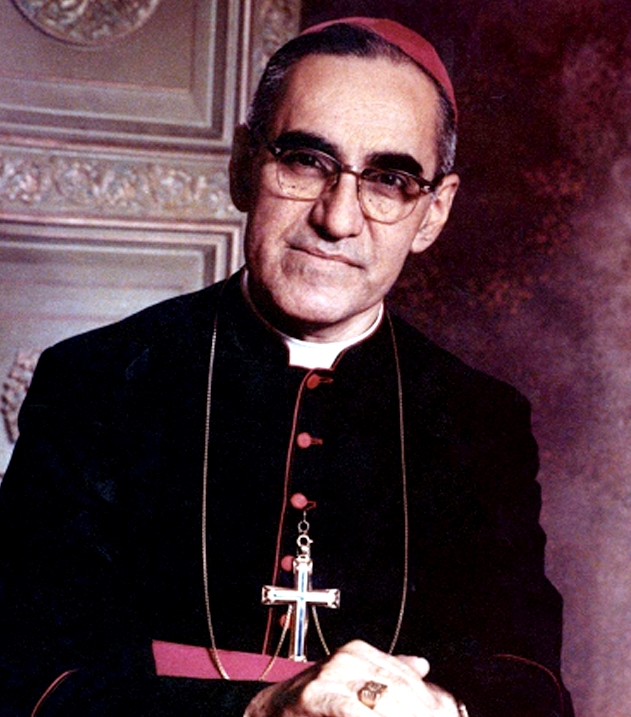
"We are workers, not master builders; ministers, not messiahs. We are prophets of a future not our own."
"May this Body immolated and this Blood sacrificed for mankind nourish us also, that we may give our body and our blood over to suffering and pain — not for self, but to give harvests of peace and justice to our people."
Bearing witness
16 November 1989 · San Salvador
Before dawn, soldiers of the Atlácatl Battalion entered the Jesuit residence at the Universidad Centroamericana "José Simeón Cañas" and killed six Jesuit priests. They then killed the community's cook and her teenage daughter, so that the crime would pass without witness and without voice.
The killings were carried out under the false accusation that the university was storing weapons and training guerrillas for the FMLN. In reality the Jesuits were killed for what they taught and published: they educated those without means, they documented the social injustice and the violence of the Salvadoran military, and they argued publicly for a negotiated end to the war and a more humane country. Ignacio Ellacuría, the rector, was at that moment one of the few people both sides would still talk to.
The order, given by Colonel Guillermo Benavides, was to eliminate Ellacuría and leave no witnesses. Their deaths became a turning point. The international outcry that followed helped force the negotiations that ended the civil war in 1992.
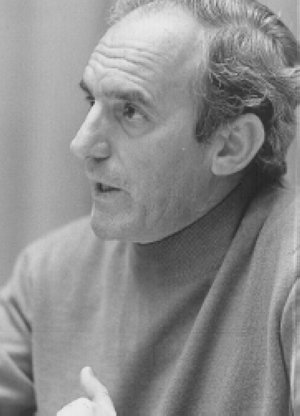
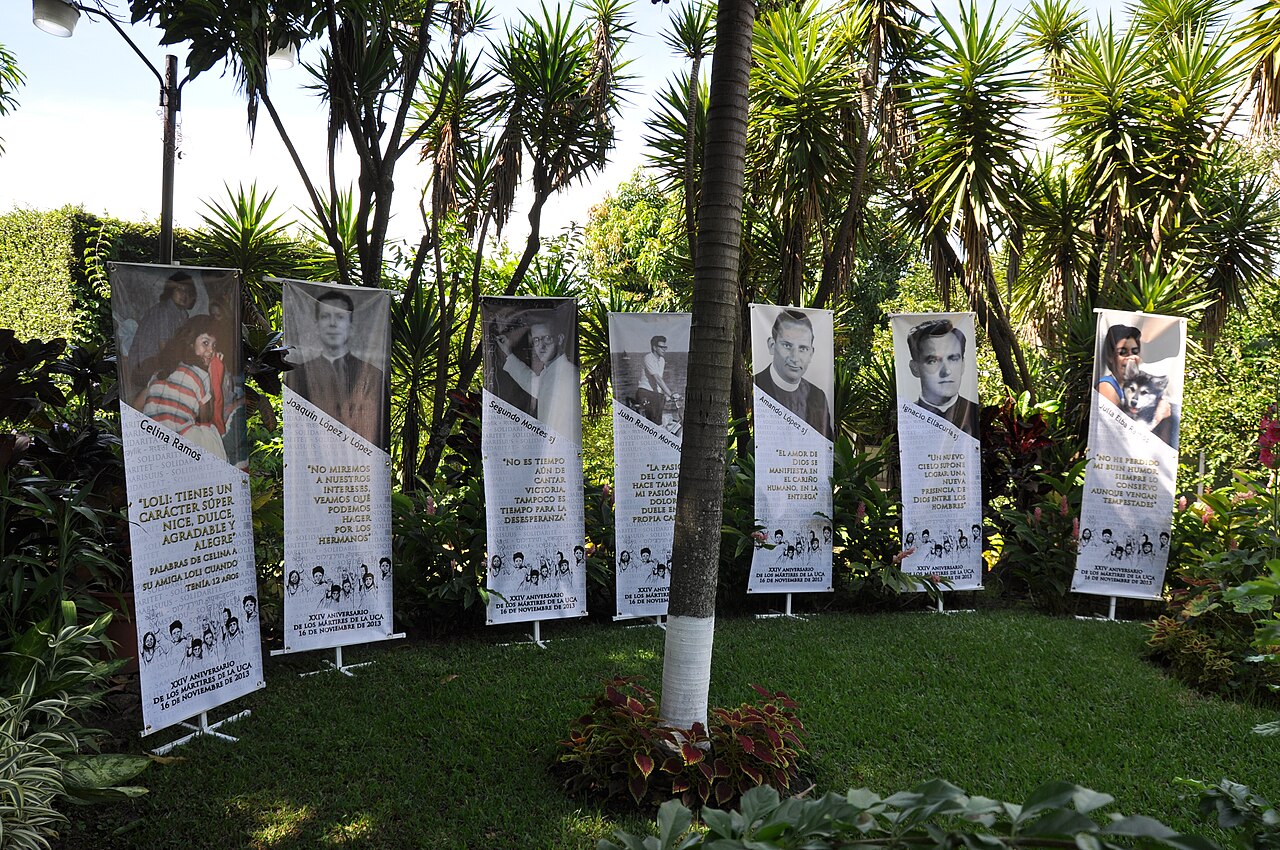
Ignacio Ellacuría
S.J. · Rector
Philosopher, theologian and rector of the UCA; a public advocate for a negotiated peace and the most prominent intellectual voice against the war.
Ignacio Martín-Baró
S.J. · Vice-Rector
Social psychologist and founder of the university's public opinion institute; father of liberation psychology, who insisted that trauma be read as a political fact.
Segundo Montes
S.J. · Dean of Social Sciences
Sociologist and director of the UCA's human rights institute; his research on Salvadoran refugees and the displaced reached the U.S. Congress.
Juan Ramón Moreno
S.J. · Theologian
Novice master, spiritual director and librarian of the Centre for Theological Reflection; assistant director of the newly founded Óscar Romero Centre.
Amando López
S.J. · Professor of Theology
Former rector of the seminary in San Salvador and of the UCA in Managua; taught theology and philosophy while serving a parish on the city's edge.
Joaquín López y López
S.J. · Founder
The only Salvadoran-born member of the six and a founder of the UCA; directed Fe y Alegría, the network of schools for the country's poorest children.
Julia Elba Ramos
Cook & housekeeper
Cook for the Jesuit community. She had brought her daughter to sleep on campus that night, believing the university was the safest place in the city.
Celina Ramos
Her daughter
Sixteen years old. She was found in her mother's arms — killed, as the tribunal later established, so that there would be no witnesses left to speak.
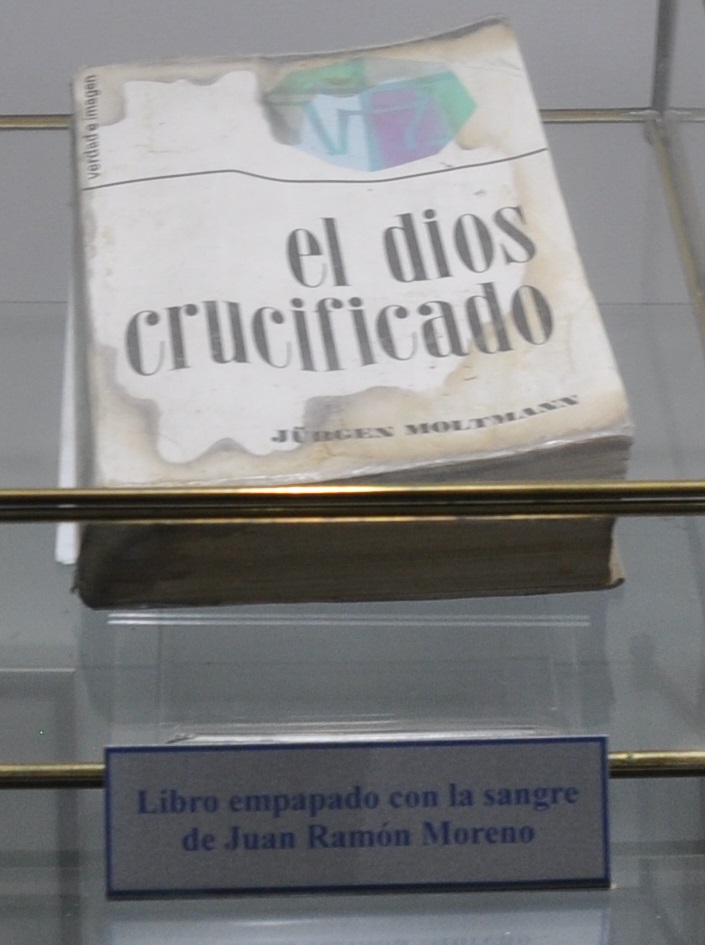
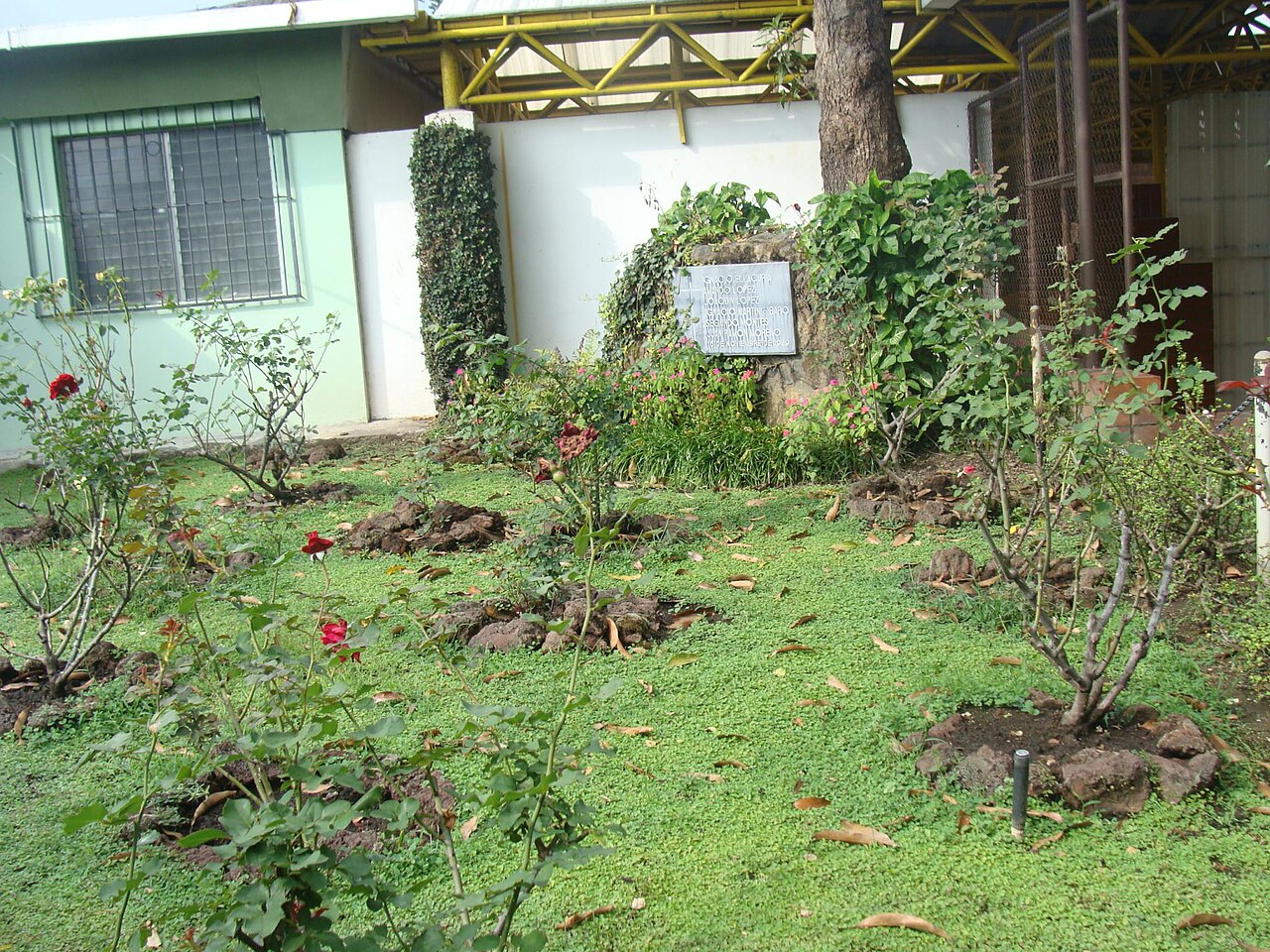
¡Presente! Called by name — and answered for
What followed
The case outlived the war itself. It is part of why the house exists: memory without accountability is only sentiment.
A Salvadoran court convicts Colonel Guillermo Benavides and Lieutenant Yusshy Mendoza of the murders. Both are sentenced to thirty years. No one who gave the order above them is tried.
The Chapultepec Peace Accords end twelve years of civil war. The UN Truth Commission later names senior officers as responsible for the UCA killings.
El Salvador's General Amnesty Law releases both convicted men within days and closes off prosecution of wartime crimes for two decades.
El Salvador's Supreme Court strikes down the amnesty law as unconstitutional, reopening the possibility of trials.
Spain's National Court convicts former vice-minister of defence Inocente Orlando Montano of the murders of the five Spanish Jesuits and sentences him to 133 years.
Our history
Romero House started in the shock that followed 16 November 1989 — and in one Jesuit's refusal to let that shock stay silent.
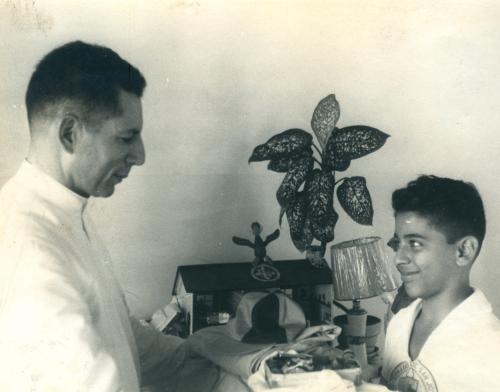
When word reached Denver that six Jesuits, their cook and her daughter had been killed at the UCA, Vince O'Flaherty was struck dumb. He was a Jesuit in his early seventies and a veteran of the Second World War, who had been novice-master through years of upheaval in the Church and the Society of Jesus, and afterwards a writer, a superior, and a spiritual guide to countless people. He was extroverted and restless for sense in the chaos, a man who always had something to say. For a time he had nothing.
Then he found his voice. He preached a thunderous homily at an enormous mass at Loyola Church honoring the UCA martyrs, and in the weeks that followed he began to describe a dream: a house where Regis students could find their own voices. He wanted it named for the man whose voice had inspired the martyrs — Óscar Arnulfo Romero.
At the 1991 commencement Vince put the idea to Tom Reynolds, who liked it immediately, and the administrative wheels started churning. Mike McManus, who conceived the house alongside Vince and Kevin Burke, set down what it was for in a letter still kept at Romero House and read each year by the incoming residents. The house, as they theorized it, had three basic components:
The killings at the UCA. Vince O'Flaherty preaches at the memorial mass at Loyola Church in Denver, and begins to speak of a house.
Vince presents the idea to Tom Reynolds at commencement. Reynolds likes it immediately, and Regis begins to move.
The first residents move in — living together, as followers of Christ, among the poor, in the neighborhood off the Northwest Denver campus.
Vince dies in his sleep in his small room at Romero House, ten days after writing his last letter to the house's alumni.
The community continues, building what Kevin Burke called "a chain of witnesses, a chain of memory."
Founders
Two Jesuits, a layman, and the administrator who said yes.
Vince O'Flaherty, S.J.
Founder · died 1994
The house was his dream. Novice-master, writer, superior and spiritual guide, he was in his seventies when the UCA killings moved him to imagine a place where Regis students could find their voices. He lived in the house he founded, and died there.
"If they are killing Jesuits in cold blood like this, then our way of life, our witness, must mean something."
Kevin F. Burke, S.J.
Co-founder · theologian
Conceived the house with Vince and Mike McManus, and wrote the account of its origins the community still reads — tracing the line from Rutilio Grande's murder, through Romero's conversion and the UCA martyrs, to a house on a Denver block.
"Above all, I remember a sense of shock."
Mike McManus
Co-founder
The layman among the founders. His letter setting out what the house was for is kept at Romero House and reflected on each year by the new group of residents. It is blunt about the difference between real simplicity and a decorative version of it.
"We looked to breed radicals, compassionate subversives, Christians worthy of the name."
Tom Reynolds
Regis University
The administrator Vince approached at the 1991 commencement. He liked the idea immediately, and the institutional work of turning a homily into a house began with his yes.
"Vince presented the idea of Romero House to Tom Reynolds, who liked it immediately."
In their own words
"Within a few very short weeks of living at Romero House, the children of the neighborhood were no longer merely statistics to me. They were children with beautiful names: Juanita, Jesus, Pablito, Susanna — children of irreplaceable value."
On just about any afternoon before dinner you could find residents throwing a football in the street with kids from the block, where the drop-out rate at the local high school was well over fifty percent. Romero House, he wrote, drew him outside of himself and taught him not only how to love others more freely but how to let himself be loved by them.
"I am now an emergency medicine resident and I come in contact with the worst of societal ills every day. I am a better doctor when I remember that I committed to service and social justice. It is hard."
Living in Romero House during her first clinical experience, she wrote, forced her to see patients as humans and to consider the social and societal determinants of health — something taught nowhere in medical school or residency training.
"There is a two-year-old named Angelo, about as cute as two-year-olders come, living a couple of doors up the street. He frequently comes knocking at the door to see whether anybody can come out to play."
From the last letter Vince O'Flaherty sent to Romero House alumni, dated 4 October 1994. He died ten days later. "I hope your lives go very well," it ends, "that the Lord's Spirit, his love, and his grace are with you. You're always in my prayers."
Life here
Nothing here is unusually dramatic. It is a set of small, repeated commitments that add up over nine months.
Regis is a Jesuit university, committed to the formation of men and women in service of others. Romero House is the place on campus where that phrase is asked to mean something specific and inconvenient — a faith, a life, a love that gives and does not count the cost.
Apply
Applications open to all Regis undergraduates. You do not need to be Catholic, or Christian, or certain of anything — only willing.
Come to an information session or visit during an open community dinner to meet current residents.
A short written application about why you want the year and what you hope it asks of you.
A conversation with the house director and residents about the pillars and the commitment.
Accepted students receive a housing scholarship and communal food stipend, and move in for the year.
Questions about the house or the application?